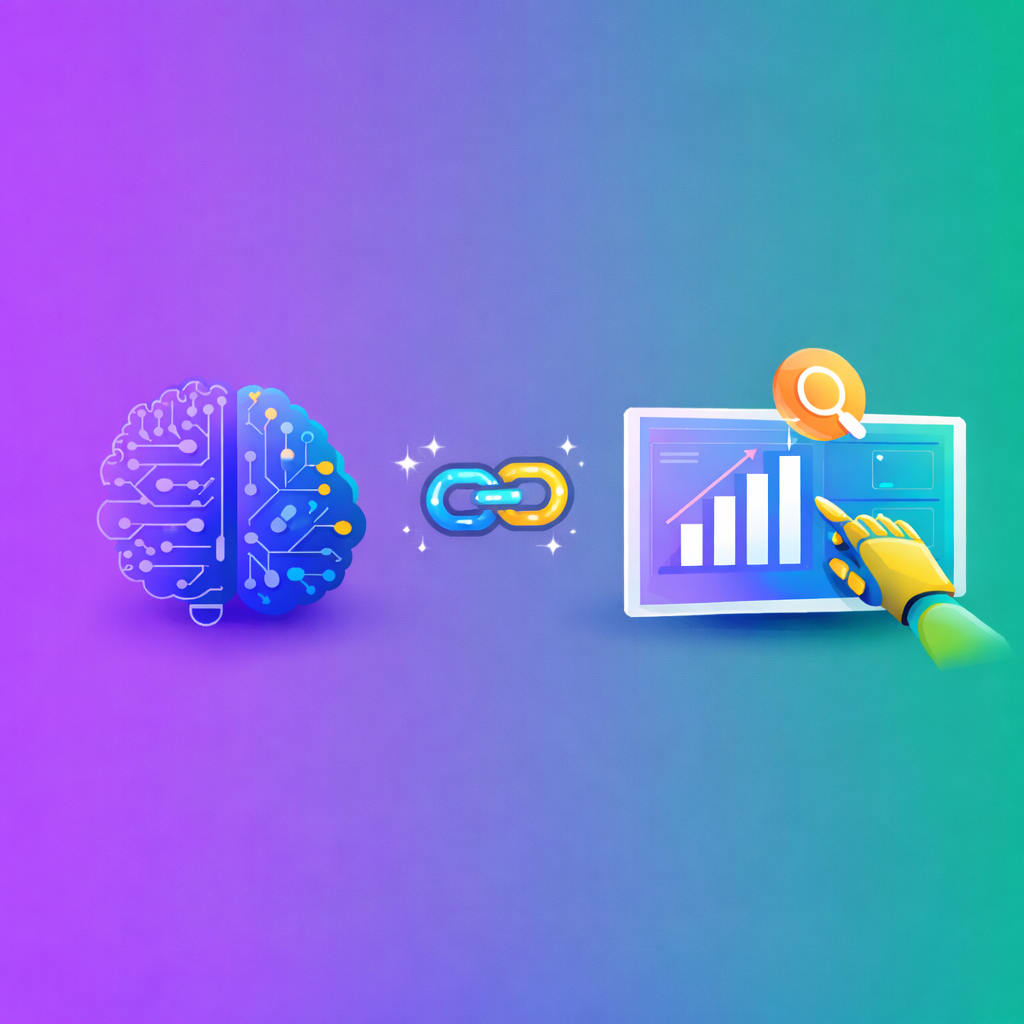
Now people are seeing software in different ways. The digital world is changing rapidly. Users used to click on tons of blue links in search results. Now they ask AI tools direct questions and take their answers on faith. As a result of this evolution, the previous SEO model is no longer sufficient for SaaS companies.
Artificial intelligence tools such as ChatGPT, Claude, and Google’s Gemini are now being used to research and compare software. People are asking about features, pricing, use cases, and alternatives.
Your SaaS brand will not be found in AI solutions if users do not reference it. This is why SaaS providers must emphasize LLM SEO. When AI-powered tools comprehend and trust your content, your brand is more visible, trusted, and easily found in an AI-based search world.
LLM for SaaS SEO is about cleaning up your online presence so that AI models can recognize, trust, and recommend your software, not traditional SEO around ranking a specific URL of yours as the number one result on page one of Google. LLM SEO for SaaS is based on "mention-share" bullshit.
When anyone asks AI, “What is the best CRM solution for a small marketing agency?” It’s not just words that AI focuses on. It compares what it sees to training data, real-time web citations, and “entities” (brands, people, and products) it’s learned to trust.
Here's a power LLM based SEO strategy to be visible online:
Instead of operating inside an LLM for SEO purposes and just trying to chase traffic, you are actively dictating the AI's decision-making process.
In the past, SEO was largely about repeating keywords. Marketers focused on keyword density and simple optimisation hacks to rank higher. That tactic was effective back when search engines were simple. Today, things have changed.
Now, search engines and AI tools use large language models (LLMs) to understand content better. These aren’t keyword-searching models. They seek meaning and context. This is called semantic richness. AI inspects how ideas link up.
For instance, if your content mentions “Project Management,” AI is looking for relevant topics such as Gantt charts, agile workflows, sprint planning, timelines, and team collaboration. It means that your content is thorough and helpful.
If your content is surface-level or regurgitates keywords, AI tools might be overlooking you. That means AI-generated answers or summaries won’t serve your content. You cannot simply create content to be visible today. Your content must also explain topics thoroughly, clearly, and naturally in a way the AI can understand and trust.
A change in user behavior drives the move to AI SEO for SaaS. People are sick of having to click through 5 blog posts to find a comparison table. They want the answer immediately. And 68% of users already trust answers from AI as much or more than Google search results.
To appear in AI search results, you must try something new and improved. You can no longer pack keywords. You need to write for AI tools that can easily comprehend your content. Here’s how to do it.
AI is a fan of simple, clear information. This means:
LLMs learn from the internet. The more your brand is mentioned on sites such as Reddit, G2, Capterra, and trusted niche blogs, the more AI tools begin to recognize it as familiar and reliable.
In SaaS SEO, however, there is still a space for technical SEO in LLMs. You should use the Software Application and FAQ Pages schema. That way, artificial intelligence search engines can be aware of your pricing, what you offer, and the frequently asked questions from your site without having to "guess”.
Instead of writing for just one keyword (like “Project Management Software”), write content that answers real questions. For instance, you might write something like, “How to manage a remote engineering team in 2025.” And this is a bit more conversational, because people use AI tools nowadays to ask full questions and learn something about SEO.
We've had a look at how SaaS brands are currently ranking in AI search engines, and some consistencies are emerging.
AI models favor one thorough, 3,000-word guide over ten 500-word "thin" posts. They look for "Topical Authority." If you're to become the go-to for LLM SEO in SaaS, you must cover every angle of your niche.
LLMs are surprisingly good at sentiment analysis. If the collective opinion on the web is that your software is "buggy" or "expensive," the AI will convey that in its summary. Your SEO strategy should also involve reputation management so the AI thinks highly of you.
We've observed that AI search engines often cite:
To truly scale, your LLM-based SEO approach needs to blend the best of the worlds that connect traditional search with AI-driven discovery. We can call this generative engine optimization (GEO). And by optimizing for LLM SEO for SaaS, you're not just optimizing for a bot. You are doing the best type of search engine optimization, optimizing for how we, as humans, now consume information.
Once your tech stack, content strategy, and brand authority are aligned with the AI model, you start building a machine that feeds itself. This engine doesn't just deliver "clicks": it provides the type we call "informed leads," who've already been informed about your brand value because an AI they trust just told them.
LLM time for SaaS SEO looks like it's here, is it coming way faster than people thought. You won't win if you're still thinking 'keywords'; it's time to focus on "Context, Authority and Entities."' And through a powerful LLM SEO plan, you continue to keep your SaaS the premium recommendation on an AI-driven planet.
If you're feeling stressed by these changes, you don't have to face them alone. You can easily make them with Lazyy SEO. Lazyy SEO leverages both bots and leading experts to help SaaS businesses surpass AI SEO with minimal manual work. Whether you're using LLMs to work with content or to keep track of your AI search engine presence, Lazyy SEO shows you how to own the future of search with minimal effort. Contact us to build an LLM SEO strategy that keeps your SaaS discoverable, trusted, and recommended by AI.
Our Answer Engine Optimization services are specifically designed to help SaaS companies rank in ChatGPT, Gemini, and other AI platforms.
.svg)
.svg)
.svg)

.svg)